
-
Object-Oriented Programming for Data Science: Building Scalable ML Systems
·

Introduction I once inherited a data science project that resembled a spaghetti western – tangled code, global variables everywhere, and functions that mutated data in unpredictable ways. The model worked, but adding new features felt like performing open-heart surgery on a running engine. That’s when I rediscovered what every software engineer knows: Object-Oriented Programming isn’t…
-
Version Control and Experiment Tracking for Data Scientists: From Chaos to Clarity
·

The Day My Model Died (And I Couldn’t Figure Out Why) I once spent three weeks building what I thought was a breakthrough computer vision model. The validation metrics looked fantastic—until deployment day, when it performed worse than random guessing. The problem? I couldn’t reproduce the exact model version, hyperparameters, and data preprocessing steps that…
-
Graph and Tree Algorithms Every Data Scientist Must Master
The Network That Broke My Recommender System I once spent three weeks debugging a recommendation engine that kept suggesting hiking boots to urban apartment dwellers. The culprit? A misconfigured graph traversal algorithm that treated our user-product network like a simple linear chain. That moment taught me what every senior data scientist knows: graph and tree…
-
The Unseen Architects of Reality: Mastering Continuous Probability Distributions for Data Dominance

Why understanding these mathematical blueprints separates data scientists from data storytellers Introduction: The Hidden Language of Uncertainty Imagine you’re a detective investigating a crime scene. You find footprints, but they’re not perfectly preserved. You have DNA evidence, but it’s degraded. You have witness statements, but they’re contradictory. This is exactly what continuous probability distributions do…
-
The Unseen Architects of Reality: How Discrete Probability Distributions Govern Your Digital World

Discover why these mathematical blueprints are the secret sauce behind everything from Netflix recommendations to fraud detection systems. Introduction Remember that time you flipped a coin to decide who pays for dinner? Or when you tried to guess how many customers would walk into your store during the lunch rush? You were unknowingly wrestling with…
-
The Statistical Mind: How Mastering Data’s Language Can Save You From Digital Deception

Ever wondered why your brilliant business idea failed despite “all the data pointing to success”? You’re about to discover the statistical blind spots that cost companies millions. Introduction: The Unseen Architecture of Reality In a world drowning in data but starving for wisdom, statistical methods stand as the last bastion against digital deception. Remember the…
-
The Brain in a Box: How Neural Networks Are Rewriting Reality (And Why You Should Care)

Imagine a world where machines can diagnose diseases better than doctors, create art that moves us to tears, and predict stock market movements with uncanny accuracy. This isn’t science fiction—it’s the reality neural networks are building today. And if you’re not paying attention, you’re about to be left behind in the technological revolution. Introduction: Why…
-
The Unseen Patterns: How K-Means Clustering Reveals What Your Data Is Hiding
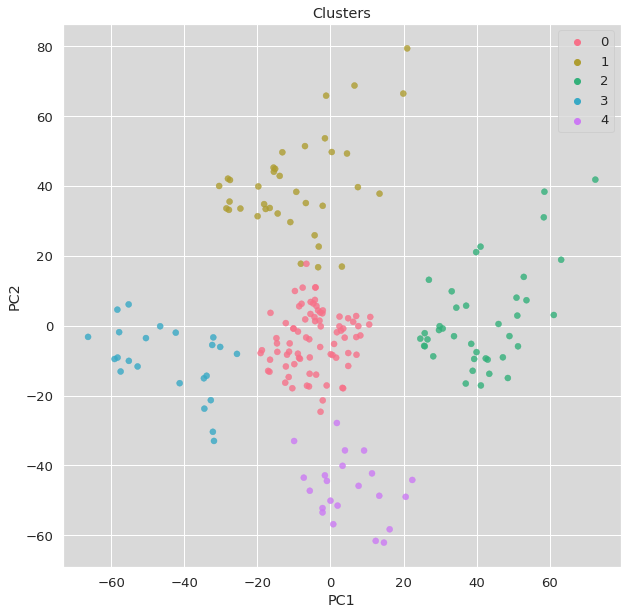
Discover how this deceptively simple algorithm can transform your raw data into actionable insights—and why ignoring it could cost you millions. Introduction Picture this: You’re staring at a spreadsheet with 10,000 customer records. Each row represents a person—their age, income, purchase history, browsing behavior. It’s a digital ocean of information, but you’re drowning in data…
-
The Neighborhood Watch: How K-Nearest Neighbors Became Machine Learning’s Most Reliable Neighbor

When your data needs a good neighbor, not a distant algorithm Introduction: The Algorithm That Thinks Like Your Grandmother Remember when your grandmother would say, “You’re the company you keep”? She was practicing K-Nearest Neighbors centuries before computers existed. This deceptively simple algorithm embodies that same wisdom: judge something by its closest companions. K-Nearest Neighbors…
-
The Dimensionality Reduction Revolution: How PCA Turns Data Chaos into Crystal-Clear Insights

Imagine staring at a 500-dimensional dataset, feeling like Neo in The Matrix before he could see the code—overwhelmed by noise, patterns hidden in plain sight, and computational costs spiraling out of control. This is where Principal Component Analysis (PCA) enters the scene, not as a mathematical abstraction, but as your digital Rosetta Stone for making…
Search
Recent Posts
- Object-Oriented Programming for Data Science: Building Scalable ML Systems
- Version Control and Experiment Tracking for Data Scientists: From Chaos to Clarity
- Graph and Tree Algorithms Every Data Scientist Must Master
- The Unseen Architects of Reality: Mastering Continuous Probability Distributions for Data Dominance
- The Unseen Architects of Reality: How Discrete Probability Distributions Govern Your Digital World
Categories
- Algorithms (12)
- Computer Vision (1)
- Data Science (25)
- Data Structures (3)
- Deep Learning (2)
- Design Patterns (1)
- Interview (6)
- Learning Path (6)
- Machine Learning (14)
- Natural Language Processing (1)
- OOPs (2)
- Probability Theory (4)
- Python (7)
- Reinforcement Learning (1)
- Statistics (5)
- Tools (1)